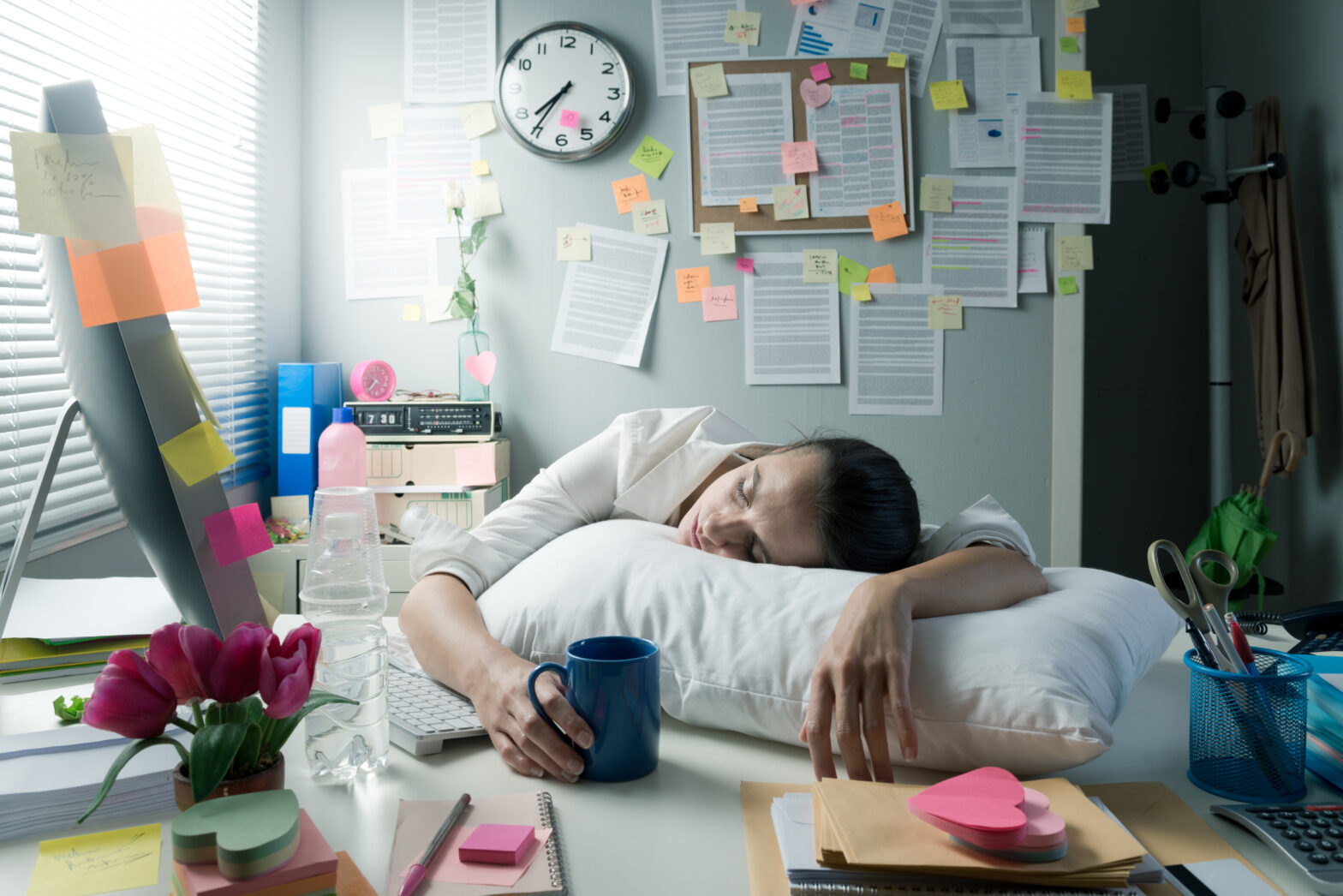
It’s a statement that has all the hallmarks of the classic “sickie”. The invalided one will put on a slightly enfeebled, croaky voice to accentuate the debilitating symptoms of an illness that is a bit like flu, but not quite.
Food poisoning is another one. ‘I think I had some fish,’ tends to raise an eyebrow – is the person really so weak that they’re unsure if they did or didn’t eat fish? It’s freakish how these culinary attacks occur to people on Sunday nights and Thursday evenings.
Migraines. Stomach aches. Pulled muscles. Received wisdom has it that the art of the sickie is to not come in for two days as opposed to the one, otherwise a single day away from work suggests you’re not really ill.
It’s universally accepted that you can’t officially call in sick with a hangover because it’s self-inflicted. I was once told that this ‘wasn’t fair because technically you’re still ill when hungover’.
Conversely, there are the martyrs. The ones who insist on coming into work with their sniffles, sneezes and clumps of grotty, wet tissues because they’re so busy and more committed than everybody else. These troopers will carry on to the bitter end, infecting the entire workplace with their germs and disease until they are forced home, where they will probably try and ‘do what they can’.
Absence in the workplace reportedly costs the economy £17 billion a year (£27.4 billion is generated in unpaid overtime, so maybe there is a trade-off). I imagine that more harm than good would be done – and the costs to the economy much higher – if the hungover, the insomniacs and those who just need a day off were forced to complete their eight hours. Beside, sometimes the reasons for not coming into work aren’t so trivial.
Our latest poll asked business owners to give the main reason for staff absences. We received over 430 responses and 48 per cent of them attributed stress as the single biggest cause for employees not coming into work. Twenty-seven per cent blamed the dubious sickie, while 10 per cent said back problems were a familiar issue and the remainder said the absences were due to the more mundane reasons, such as annual leave.
The response for stress-related absence is high. It could well be a sign of the times as companies continue to push their staff in the ‘age of austerity’, trying to produce more…with less. Another stat, supplied by mental health charity Mind, reveals that stress costs businesses around £26 billion a year, with many employees turning to anti-depressants.
This figure jars with the £17 billion mentioned earlier, but let’s forget the money for a second. The overall picture is unedifying. Stress in business tends to be associated with the high flyer, the City mover and shaker. But financial pressures and greater responsibilities will be taking their toll among employees in both the largest and smallest of companies, and the latter may not be so well-equipped to handle a delicate matter like stress in the workplace.